Monday, December 22, 2025
Archaeology: Dwarf Class for 5E
Tuesday, July 8, 2025
Broken Hearted
(Despite the fact that one of his first reviews was of Mothership, which is also an OSR game, but I guess people just forget that? Discourse is dumb)
Monday, July 8, 2024
Summer LEGO RPG Setting Jam
Monday, June 10, 2024
EVERY Initiative Method??
Monday, May 27, 2024
Deconstructed Ravenloft for Dinner - Mindstorm Guest Blog
Friday, January 5, 2024
Crunch Criteria
Every piece of crunch you add has a cost. A cost in how much brainpower it takes to learn, to teach, to remember, to use. The essential tradeoff is to make sure that crunch is able to add something really valuable to the game in spite of that cost. I try to only add crunch in the parts of the experience that I think have the most potential for interesting decision-making.
Sunday, August 13, 2023
Brave, Final Edition
Monday, August 7, 2023
Clashing, Continued
Sunday, August 6, 2023
Clashing, Not Attacking
Tuesday, August 9, 2022
Computer Hacking in RPGs
I've been thinking about hacking a lot lately. Not "hacking" like hacking a rules system. Not even "hacking" like "exploratory programming." I'm specifically talking about our favorite x-tremely kool 90's heroes who save the world by breaching computer security (and occasionally rollerblading). It's a well-known challenge of game design.
I have never actually played a cyberpunk RPG like Shadowrun or... Cyberpunk. Hacking was in Star Wars: Saga Edition but I kinda bullshitted (bullshat?) my way through those parts because I was like 16 when I ran that game. But I have read lots of different hacking rules and I've read lots of other people discussing their experiences using them, and these are my takeaways for the most common problems:
- It's complicated and a headache to learn, especially for the GM who has the rest of the system to learn as well.
- It's usually only for one player to participate in while everyone else waits on the sideline, and in Shadowrun especially is notorious for taking a really long time.
- Either it's realistic and confusing or it's abstracted and unsatisfying.
- The GM doesn't consistently integrate it into the game world, treating it almost like an afterthought.
Saturday, July 23, 2022
A Primer on Star Wars RPGs
If you've received a link to this article, you may have just asked the question, "what's the deal with Star Wars RPGs?" The first part of this post is a succinct overview of all the major (and some minor) options out there which cover this need.
I decided to write this because in the last two weeks, I've seen at least 4 Reddit posts and a couple Discord messages where people asked that very question, and I get tired of explaining it. So if you see someone asking that question, link them to this article.
Monday, April 25, 2022
Potpourri
![]() |
| Artist Credit: Kieran Yanner |
In this post you'll find seven really small RPG-related things I'd like to share which are all completely unrelated to one another. I hope the comments are chaos. They include:
- An idea I had for a particular take on the "Grit vs Flesh" mechanic
- A weird experimental PC I recently tried
- Possibly the most famous example of the power of tactical infinity in RPGs
- A world map I've slowly been working on
- An idea I have for a new monster type to fit into the traditional D&D schema
- How I would run a sandbox in a superhero game
- Doppelgängers
Sunday, March 13, 2022
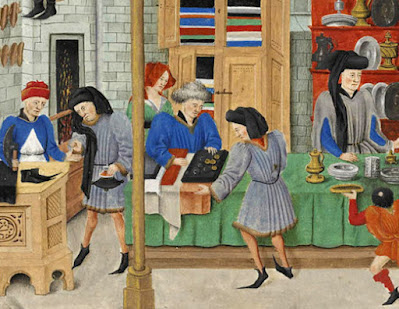
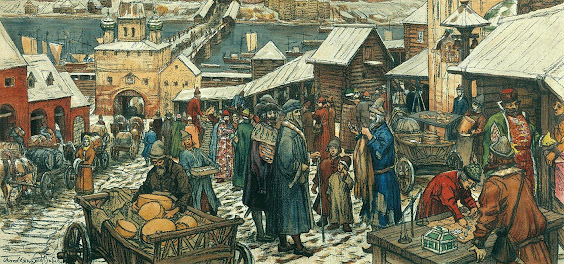
Alternative Economics (Part 3: Treasure-Driven Adventure)
Continuing from part 2, I'm exploring some alternatives to the traditional role that money and economics plays in D&D, inspired by real-life situations found in history, with the occasional creative liberty taken here or there to make things more gameable. It's fantasy after all, we're not going to stress about accuracy here. Last time I just talked about small-to-medium adjustments to the existing economic situations your players engage in. This time I want to think bigger picture. In traditional, OSR, "XP for Gold" schemes, dungeoneering is a path that leads to domains being built up for each individual player. But what other campaign arcs shaped by treasure can we imagine?
An important caveat for this: all specific numbers and variables are intentionally left ambiguous. I wouldn't know the optimal figures or ratios for these ideas to work, especially with the pricing schemes written into your RPG of choice. All of these are simply described in the abstract. What I will say is that most of these schemes work better if you simplify capital into large blocks rather than penny-pinching. When you're a pirate crew raiding a merchant vessel, you'll win enough treasure to buy whatever mundane equipment you want. So the real measure of wealth is in big abstracted chunks that you can use to buy ships and fortresses whole.
All of the following ideas would almost certainly need to be implemented and communicated to the players from the very beginning, as they're all meant to shape the entire campaign for everyone. In fact, I would encourage anyone out there to design a whole RPG or adventure scenario after your favorite examples here, since that's what these really are. The caravan-XP system from Ultraviolet Grasslands I described last time is a really good example of the sort of thing I'm here to offer you.
Saturday, February 26, 2022
Alternative Economics (Part 2: Interesting Choices)
Sunday, February 6, 2022
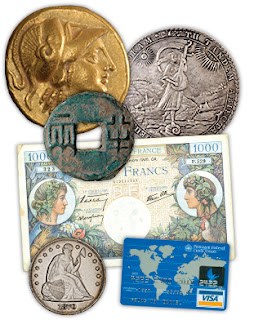
Alternative Economics (Part 1: Money)
Tuesday, January 4, 2022
My (Untested) Theory of Nautical Campaigns
You know what I'm talking about. "The pirate campaign." "The wavecrawl." A "saltbox." "Maritime adventures." A notoriously elusive type of D&D campaign, for reasons fathomable only to those poor fools who've attempted it. And me, for I have infinite wisdom.
Friday, December 24, 2021
Subterranean Thoughts
So I recently took greater notice that many of my favorite gaming writers will post little snippets of what they've been working on to their blog. Even if it's incomplete, it's still a solid preview, can build hype, and is probably somewhat usable on its own. So why don't I try that?
My home campaign setting is called Underworld, and is all about that sweet, dank Underdark, baby. When I first started working on it, I spent a long time thinking about how to bring more out of the Underdark experience in D&D. How much depth would need to be added in order for that one trope to carry an entire campaign? And I like thinking in terms of rules and mechanics at least as much as lore, when it comes to worldbuilding and reinforcing themes.
The following materials were mostly written around 2016 and 2017 but I was heavily sidetracked by worldbuilding and "higher level" game design. Oh, and getting a bachelor's degree. But I consider all of this to be stuff that I one day will return to and do justice, because it's important (in fact, I made a couple edits as I copy/pasted it here). I anticipate eventually either putting this stuff into a Brave supplement that'll have rules, systems, and tables for Underworld stuff, or I might just compile and publish my setting outright and put this stuff there instead. Contained within the following thoughts are some implied setting assumptions that may not be true for the "default, vanilla" Underdark, but you'll still enjoy it. Plus, I included lots of great pictures you'll want to expand.
And yes, the release of Veins of the Earth did stifle me a bit. But while that book is indeed excellent, I also think you'll agree that much of what follows builds onto it quite nicely and covers things it doesn't address.
Saturday, December 11, 2021
A Thorough Look at Skill Challenges (Part 2: Analysis)
Tuesday, October 5, 2021
Gritty Realism: Adventuring in Weeks, Not Days
Because apparently this is a 5E blog now, I'm going to talk about the Gritty Realism variant rule suggested in the DMG on page 267. But wait! Don't go! You know me better than that. Of course I'll find a way to make it relevant to you and your rules-lite artpunk post apocalyptic furry heartbreaker as well, since I know you don't play D&D 5E.
- The Warriors
- The Avengers (well, like 90% of it)
- Night of the Living Dead
- Clue
- Dredd
- The Goonies
- Escape From New York
- 24 (the TV show)
Sunday, September 19, 2021
Iterative Design
If you work in any form of engineering then this is probably a familiar idea. I just want to talk about how valuable I find it to be when it comes to RPG design. I've always really liked that the standard in RPGs is to have new "editions", rather than straight-up sequels. And because it is, to greatly generalize, a fairly scrappy and accessible hobby, we get to do lots of communal collaboration. We build on each others' work. We actively encourage the theft of good ideas (within the bounds of intellectual property rights). Most RPGs list their "Rule 0" as being something along the lines of "the GM can and should ignore or change any part of the game they want to if they judge it best for their group." It's like you have a game designer at every table.
The problem is that a lot of folks are pretty amateur as game designers. The single biggest failing, I think, comes from this very gap: not enough would-be designers are engaging with iterative design.
You look at what's come before and you use it as a basis for what you'll create anew. You examine the previous version to understand its design, paying attention to the context which created it and asking yourself whether or not those same factors remain relevant. And at the very least, the common corollary to that rule 0 is this: "a good GM will first make an effort to understand the original rule's purpose before deciding to change it." All-too-often ignored wisdom.
I especially find this to be common in two cases: 1) people complaining about design they don't understand, and 2) people making poorly thought-out houserules. Let's talk about some examples.