Showing posts with label Adventure Design. Show all posts

Tuesday, December 3, 2024

My (Moderately Tested) Theory of Fear

This post collects a lot of miscellaneous observations and advice, some from other thinkers and some from myself. It's all basic-level. There's plenty of stuff out there far more advanced than this. This is not written with any particular game system in mind, and it includes a mix of game master advice and game designer advice.

Here's the fundamental problem of this topic: most of the time, preserving the players' agency is paramount. But fear complicates this priority. Fear is an involuntary mental state, but it can shape your behavior in profound ways. No heroic adventurer would choose to be afraid when faced with peril.

Ideally, you trust the players to roleplay their characters' emotions on their own. "If it seems like your character would be afraid of this, then try to play them like they're afraid." And if everyone is participating in good faith, they'll try their best. But unlike other emotions, authentically roleplaying fear is much easier said than done.

There are a number of ways to help resolve this problem. Different games and playstyles offer their own answers. Some of them contradictory, some of them mix well. Here's the stuff that makes sense to me based off of all my experience. I'm splitting this into three sections: 1) Player Fear, 2) Mechanical Fear, and 3) The Overlap.

Monday, May 27, 2024

Deconstructed Ravenloft for Dinner - Mindstorm Guest Blog


This year, my friend Ty is taking his blog mindstormpress.com on tour, and I'm lucky enough to be honored with one of his highly-prized articles. I've said some pretty harsh things about Ravenloft in the past, so of course I was delighted to see Ty take that as a challenge. I think you'll agree, the results are top notch. Please enjoy this excellent guest post, and be sure to go check out Mindstorm afterwards if you aren't already following his work.

-Dwiz

Deconstructed Ravenloft for Dinner

Since its inception, Ravenloft and the fearsome Strahd have captured the hearts and minds of tabletop gamers everywhere. From the first published edition—made for AD&D—all the way to the mass-marketed, bloated, and hyper-commercialized iteration for fifth edition, people have been delving into the lands beyond the mist and trying to fight the big daddy vampire.

What makes the adventure and setting so dang captivating? And, more importantly, can we break it down into its base components, inspect those components, replace them, and then force everything back together? Sometimes, the best way to play with legos is to smash your big sibling’s castle and then try to put it back together before they get home. Our version of Ravenloft is going to slap because it’s going to be personal, homemade, and filled with our own unique interests and idiosyncrasies.

Strap in. We’re hot-dropping into Barovia for the biggest heist imaginable. We’re taking the ideas.

Monday, March 25, 2024

No Foolproof Illusions

This post has some required reading: a blog post from Swedish designer (?) Sandra Snan called Blorb Principles.
[By the way, Sandra's blog is absolutely bonkers. She's written about blorb a lot but you'll have to hunt for it. Good luck]
Additionally, you may also wish to read this post from Rise Up Comus and/or this post from Technoskald's Forge. They are both good, although not necessary to follow my line of thinking here.

I like Sandra's blorb principles. When I first read her post, I felt... relief. For many years, I've felt a sharp and uncomfortable distance between my own playstyle and the philosophies described by my colleagues and other popular designers. Sandra's post was the first time I saw someone clearly articulate a set of preferences I've long held but which I couldn't effectively advocate for on my own. It feels nice to see your own philosophy given a name, and to finally have a way to easily connect with like-minded GMs.

But part of why Sandra's post instantly clicked for me is because she was describing things I already believed, techniques that I already rely on. By far the most common response I've seen to the Blorb Principles is still outright confusion. So just like many others before me, this post is my own effort to explain why I prefer a Blorby approach to the alternatives other people offer up. Maybe this will help it make a little more sense to some people.

Sunday, November 19, 2023

Action Mysteries


Mystery scenarios are probably the second-most popular genre of gameplay in RPGs after dungeoncrawling. Despite this, quite frustratingly, most detective-y games don't provide much support for facilitating the actual act of investigation. Call of Cthulhu, for example, just has a skill system for resolving basic tasks, much like any game would. Same with Delta Green, same with Blade Runner, same with Liminal Horror.

But even if the most popular options dodge such a big question, there's actually a lot of existing literature on the subject of running mystery games. Tools, techniques, and advice abound (mostly in the blogosphere).

Some offer techniques for robust level design. Justin Alexander famously has the Three Clue Rule and Node-Based Scenario Design. The disgraced Zak S wrote about Hunter/Hunted and Investigations-as-Dungeons.

Others give advice for refining the act of inspecting and uncovering information itself with smarter adjudication. Alexander also described his Matryoshka Search Technique which is a simple trick. Mindstorm wrote a post called Ransacking the Room which I find utterly brilliant. DIY & Dragons gave us Landmark, Hidden, Secret which I'm pretty sure Nintendo must have studied very closely to make the last couple of Zelda games.

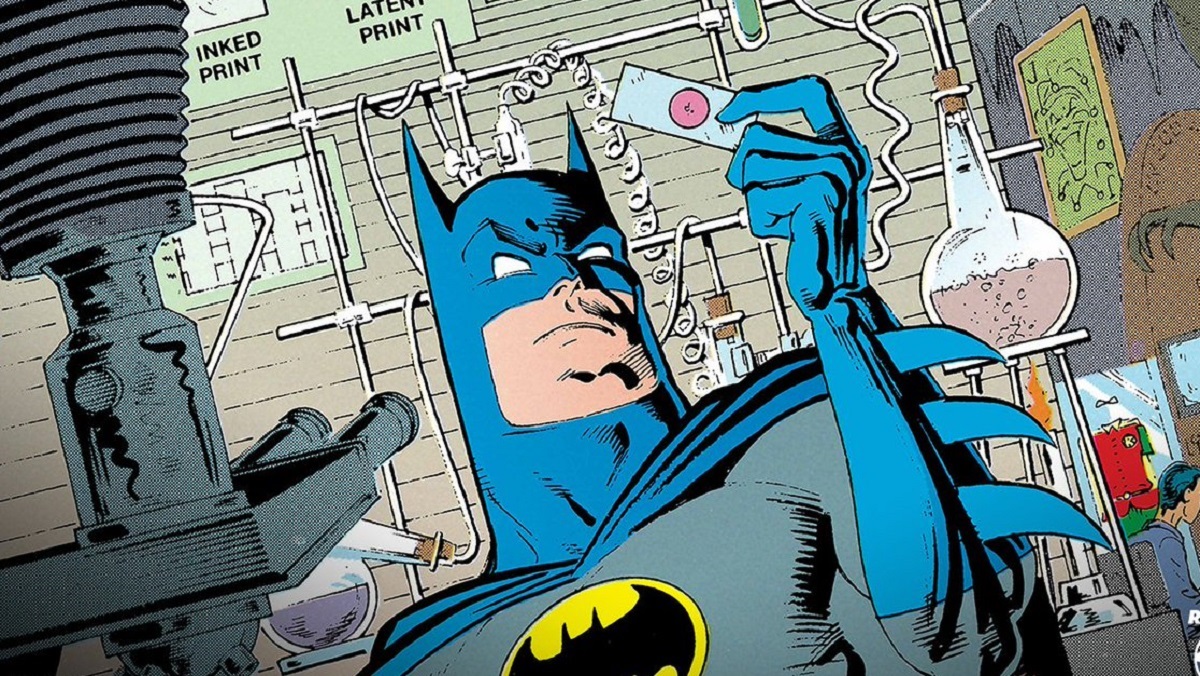
Sean McCoy has argued that the answer lies in smart visual information design. Give the player a literal tool that helps them solve a mystery. I took a class in college called "intelligence analysis techniques" that had a lot of very gameable things I think could be a great foundation for a system (timelines, network diagrams, cross-impact matrices, analysis of competing hypotheses, etc.).

Still others reinvent the genre entirely by way of novel game design. Robin Laws built the GUMSHOE system to bypass the issue of players missing clues, which was further iterated on in Cthulhu Dark by adding some dice. The game Brindlewood Bay relies on "quantum mysteries" that everyone co-authors as they go along, which Prismatic Wasteland has also described.

Alice is Missing is a totally unique example because it's built around gamifying one specific mystery and set of ingredients that go into it, having players draw cards from preset decks in order to form the truth as they're discovering it.

The world of video gaming has plenty of insights, too. Game Maker's Toolkit has a really nice video identifying three types of detective challenge: investigation (uncovering and collecting information), contradiction (noticing inconsistencies and flaws in information), and deduction (interpreting available information to extrapolate new information).

These are all perfectly cromulent additions to the collective body of RPG detective theory. I am here today to offer a modest contribution of my own to that corpus. I'm going to refer to it as an Action Mystery.

Friday, September 15, 2023

Nested Tasks

[This post contains mid-sized spoilers for the video game Breath of the Wild and the RPG adventure In the Shadow of Tower Silveraxe]

Your quest is to awaken the slumbering elf king by bringing him the fairy stone. To do that, you must journey to the ancient shrine of Cernunnos, now controlled by orcs deep within their dark, industrial colony. You get behind enemy lines, sneak past orc armies, kill some scouts, steal their maps, and locate the shrine. Once at the shrine, you have a dungeon to clear out. There's a sequence of rooms you discover, soon finding the fairy stone. It's locked behind the Hart Gate, an ornate lattice fence shaped like a stag. You'll need a series of keys, each one hanging from a branch of its antlers so you can unlock the gate. That means exploring the maze of trials and secrets throughout the shrine. In each room of the shrine, there's monsters and orc patrols, puzzles and riddles, traps and hazards, secret treasures, imprisoned civilians to free, and weird magic stuff to play with.

Room < Dungeon < Hexcrawl

The above adventure doesn't exist. But the broad strokes are familiar. All adventures are a sequence of tasks. But the way those tasks are organized goes a long way in shaping the whole thing. There's a hierarchy. Every room of the dungeon presents a short-term task. You start a combat encounter with some orcs, and for the next stretch of playtime that is the task you are performing. But those are all contained in the context of the dungeon task, which you're also performing simultaneously. It's not just a series of arbitrary, disconnected episodes. There's a through line tying it together. Collect the keys to unlock the gate and get the MacGuffin. That's a mid-term task you began when you entered the dungeon and which you completed after finishing a bunch of the rooms. But the dungeon is not the full story, either. It's also a piece of a greater context. Doing the dungeon is just the middle task in the hexcrawl. Getting to the dungeon was a series of tasks, as is getting back from the dungeon. All of those hexcrawl tasks, with the dungeon task in the middle, comprise a long-term task. And it's that long-term task that is the true "quest."

This probably sounds obvious, but I have a theory.

Wednesday, July 5, 2023

Christmas Adventures

[What better time for such a post than July 5?]

Because I make Halloween adventures, I have often been asked, "are you going to make a Christmas adventure next?"

The short answer is no. But because I've been asked so many times, I've put a lot of thought into it. Here's my full answer.

The first and most important reason why I wouldn't is that I don't really like Christmas. Some years I'm in more of a "it's just not for me" mood, but other years I can get pretty Grinch-y. And so I wouldn't really be the right person for the job. I hope that anyone who reads or plays Tricks & Treats can tell that I fucking love Halloween. But if I'm correct and that shows through in the finished work, then surely my lack of love for Christmas would show in any attempt I make at a Christmas adventure. It deserves to be made by someone who has enough passion to do the task justice.

But I also have a weirder, less convincing reason why. A train of thought where I've talked myself into believing that, ackchyually, a Christmas adventure would be inherently inferior to a Halloween adventure for XYZ reasons!

Monday, January 2, 2023

Picture Book Gameplay


I recently had a very novel experience running a game that I think has some potential that ought to be explored. Maybe someone out there has done this sort of thing and would like to share. It's a weird one.

Not too long ago, I was flattered to be asked by W.F. Smith (of Prismatic Wasteland fame) to do some playtesting for his upcoming crowd-funded adventure "zine," Barkeep on the Borderlands. The premise is simple: 200 years after the famous Keep on the Borderlands adventure from the TSR era of D&D, long after the Caves of Chaos have been cleared out by adventurers, the keep has grown into a large, bustling, cosmopolitan community. Its present-day culture and institutions of power are colored by the long history of consequences from that legendary adventure, and now your 21st-century players are invited to partake in one of the all-time great traditions celebrating that legend: six days of non-stop carousing in the Raves of Chaos. It's a barcrawl adventure with a hand-crafted town populated with lots of fun NPCs, factions, plot hooks, and 20 fully-detailed pubs.

I playtested it with three separate groups across 4 sessions, getting about 20 hours of experience running this adventure in total. I am happy to report that it was a great success, much fun was had, and valuable feedback was gained and incorporated. I recently gave high praise to one of Smith's previous, smaller adventures, and I myself originally backed the Kickstarter for Barkeep simply as a fan, not having yet really met him. Well before moving on to the main subject of this post, I'll go ahead and give a quick two thumbs up review. This adventure is dripping with that special sauce you want. I wasn't compensated in any way, save for the privilege of getting to play this adventure before anyone else on Earth. Here's a link to pre-order a copy.

But there was one pub my players went to that was a bit different.

Tuesday, November 8, 2022

Enough Dweeb Adventures

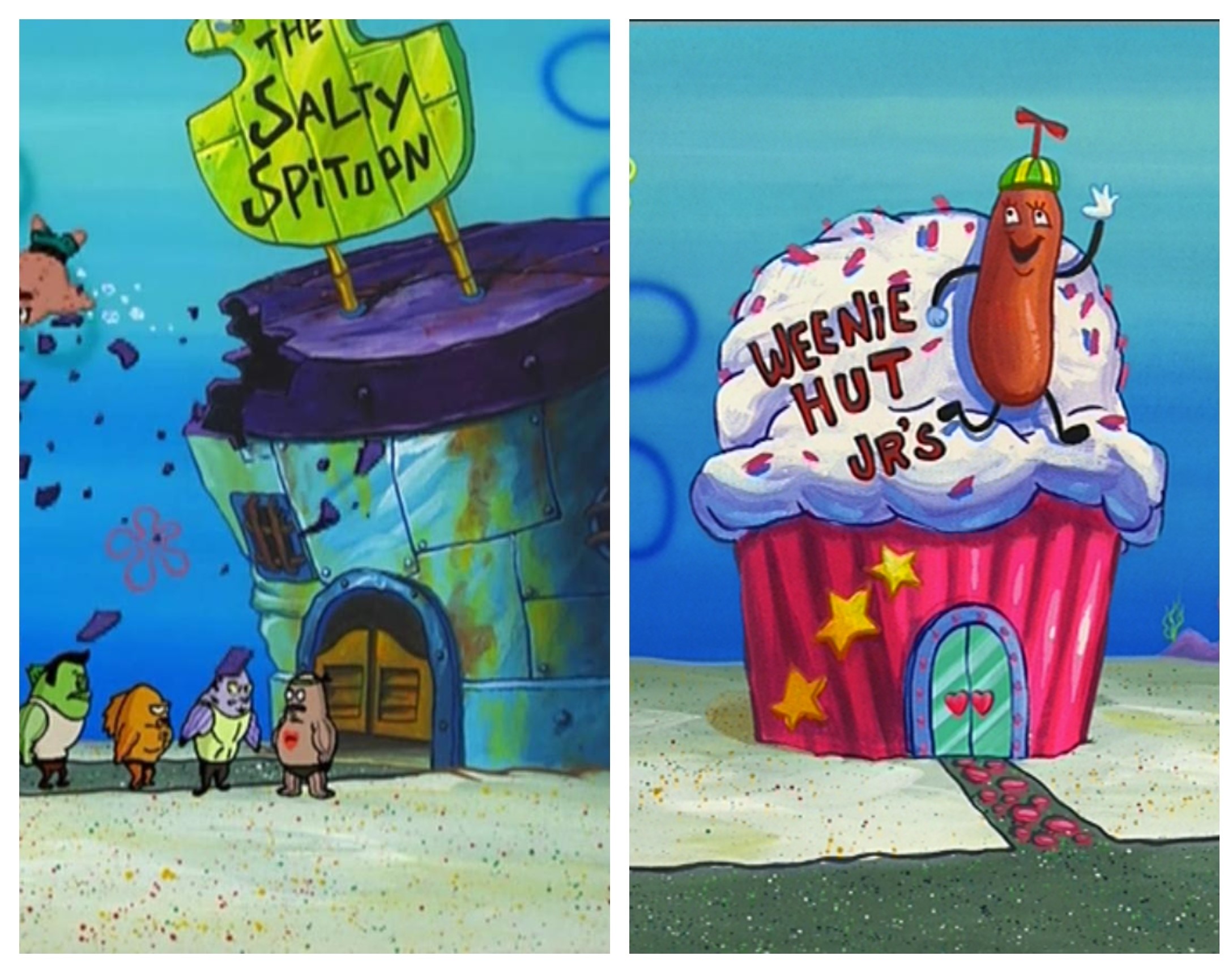
I have a hypothesis: Wizards of the Coast's 5E adventures are for fucking weenies.

I know, it's a tall claim to make. Let's prove this through rigorous scientific analysis.

[Okay, in all seriousness, I recognize that I'm really preaching to the choir here. But use this article for 1) knowing how not to write dope adventures, and 2) explaining to your friends who are squares what the difference is between dope adventures and mayonnaise adventures.]

The principal variables I want to examine are villains and conflict. They reveal a lot about a designer's sensibilities towards what's cool. Because as we all know, the bad guys are always cooler than the good guys.

Saturday, July 30, 2022

HeroQuest: The Tourney of Champions

The best thing about HeroQuest is pitting your friends against one another in a vicious deathtrap!

I've just designed my first custom scenario for HeroQuest, which I intend to play with one of my board gaming groups when we meet in a few weeks. It's a big group, so I had the idea of a competitive scenario where you split the players into two teams and have them fight one another in the dungeon. I have no idea how well this will work, if it's balanced at all, if we'll be able to get through it in one session, etc. It makes use of lots of materials from all the expansions because I backed the crowdfunding campaign and got them all as rewards, and I want to try using those pieces finally. I figured I would make the zaniest funhouse dungeon I could, y'know?


-Dwiz

Friday, July 1, 2022

Traits of the Mythic Underworld


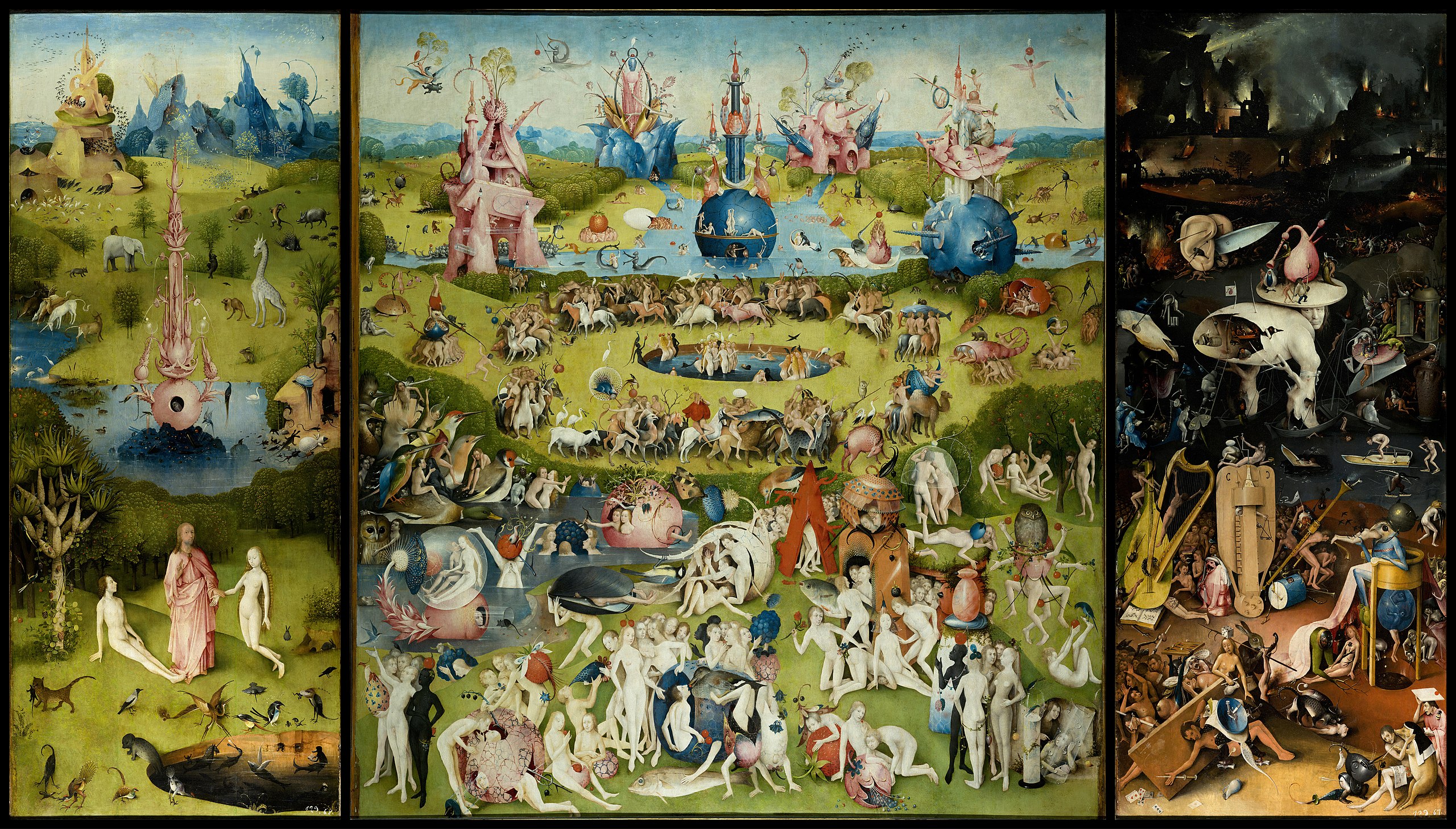
The "Mythic Underworld" is a term popular in the OSR that was (probably) coined by Trent Smith and then popularized through an essay by Jason Cone in Philotomy's Musings. Cone argued that the rules of OD&D can be interpreted to suggest that the "dungeons" that adventurers delve into aren't really to be understood as real, logical spaces created by normal people or natural processes. Rather, they're more like a surreal, dreamlike, and hostile realm that runs on its own twisted logic, which might be inconsistent. It gives the referee some leeway to make a contrived, game-y, "funhouse" dungeon instead of stressing about accuracy or rationality.

Much of what Cone describes are just traits of megadungeons, or even simply dungeons in general. Things like, "non-linear pathways" and "lots of connections between levels" aren't really mythic, they're just good level design. So, extracting from his original writings on the matter, here are the traits he identifies that are actually mythic (in my view):

  1. It's so large it might have infinite levels.
  2. The deeper you go, the more dangerous it is.
  3. Its layout may change over time.
  4. Doors are locked/stuck for PCs by default, but automatically swing open for monsters.
  5. Related, it is shrouded in darkness, but all monsters have infravision.
    • It should be noted that when a monster is persuaded to join the party, they lose these two privileges! This strongly suggests that the space itself is intentionally rewriting its own rules to oppose the players.
  6. Torches and whatnot might be randomly blown out by a strong gust of wind, despite the fact that you're deep underground in, like, a tomb or something.
And... that's it. I always thought this idea was much cooler in theory than in reality. I agree with Cone that this is really the only reasonable way to interpret the rules, but I always wanted there to be more. So I've compiled some:
  1. Party incurs fatigue/stress the longer they spend in the dungeon (taken from Basic D&D).
  2. Rations spoil once you enter the dungeon (BECMI D&D, thanks to ktrey from d4caltrops.com)
  3. When the players open treasure, monsters might pop out of the walls, generated from thin air (taken from the board game HeroQuest).
  4. Monsters don't exist until the players first observe them. Thus, exploration should be slow and methodical or else the players will too quickly surround themselves in monsters (also taken from HeroQuest).
  5. The monsters cannot set off traps (HeroQuest again but I wonder if this might be encoded in D&D somewhere in its history).
  6. The scenery and room features attack you (countless haunted house media, but in this case I was inspired by the 2006 movie Monster House).
  7. Stairs turn into ramps, doors start randomizing where they lead to, hallways become endless, secret doors appear and then disappear (no, I don't mean they become hidden again. I mean they stop existing), etc. (more haunted house shenanigans).
  8. Weird M.C. Escher gravity rules.
  9. Advanced Darkness.
  10. Every hall keeps leading back into the same room no matter what, and it's full of horrible doppelgangers (the Black Lodge from Twin Peaks).
  11. Doors to rooms that would overlap each other, doors into rather thin walls, windows to the outside world in an interior room, doors/windows/entrances moving which side of the room they’re on, etc. (the Overlook Hotel from The Shining).
It's a start. Now of course, I don't necessarily advocate only using the Mythic Underworld. I quite enjoy "reasonable," well thought-out dungeons. But if you're going to make a Lynchian funhouse, then you should commit. In the Mythic Underworld, the dungeon is a living organism and the PCs are an infection. It has its own natural immune system that wants to drive them out. For the PCs to feel as though they're fighting the environment itself, I think it needs to put up a better fight.

-Dwiz

Sunday, June 26, 2022

Stranger Things and "Puzzle Monsters"

[This post will contain spoilers for Stranger Things up through season 4]
The best monsters are not merely a big sack of hit points you hack-n-slash your way through because of a random encounter table. No, they're something more. They have qualities possible only through the conceits of fantasy. They challenge your brain just as much as your stats and dice. They stick in the mind. They're not just a one-and-done encounter. They're grounded in the world and its rules, and can't be understood merely with numbers. And maybe most of all, they're robust enough that reckoning with them is the whole adventure, or at least could be the whole adventure.

A very popular piece of advice in the OSR is "Just Use Bears." The basic argument is that, "monsters which don't have elaborate special abilities could probably be represented sufficiently with the stat block of a bear, since the minutiae of individual stats rarely has a significant enough impact on a fight to be worth the trouble of always having a custom stat block prepared."

As practical advice, this is good. But in spirit, I feel like it's a concession. A failure. If you're using a monster that could be substituted with a bear, then maybe you shouldn't even have that monster at all. Monsters should be special. You could be running a better game where you never use that advice. Not because it's bad, but because you've made monsters good enough that the advice isn't applicable.

To illustrate what I'm calling "puzzle monsters," we're going to go through the monsters used in the Netflix show Stranger Things as well as some examples I've created for my own adventure scenarios. After that, I'll walk you through the steps I take to create a puzzle monster, and other considerations that help a lot in the creative process.

Monday, April 25, 2022

Potpourri

Artist Credit: Kieran Yanner
My blog output has been slow this year. Partially this is because I've started several very long posts that are each taking a while to finish, but mostly it's because I spend most of my time working now and have very little time left each day to do anything. I wanted to come up with something a bit smaller that could work as a good blog post to get out before the end of the month that isn't one of those huge posts, but I struggled. Everything I came up with was too small. So why not just offer all of them at once?

In this post you'll find seven really small RPG-related things I'd like to share which are all completely unrelated to one another. I hope the comments are chaos. They include:

  1. An idea I had for a particular take on the "Grit vs Flesh" mechanic
  2. A weird experimental PC I recently tried
  3. Possibly the most famous example of the power of tactical infinity in RPGs
  4. A world map I've slowly been working on
  5. An idea I have for a new monster type to fit into the traditional D&D schema
  6. How I would run a sandbox in a superhero game
  7. Doppelgängers

Sunday, March 13, 2022

Alternative Economics (Part 3: Treasure-Driven Adventure)

Return to part 1

Continuing from part 2, I'm exploring some alternatives to the traditional role that money and economics plays in D&D, inspired by real-life situations found in history, with the occasional creative liberty taken here or there to make things more gameable. It's fantasy after all, we're not going to stress about accuracy here. Last time I just talked about small-to-medium adjustments to the existing economic situations your players engage in. This time I want to think bigger picture. In traditional, OSR, "XP for Gold" schemes, dungeoneering is a path that leads to domains being built up for each individual player. But what other campaign arcs shaped by treasure can we imagine?

An important caveat for this: all specific numbers and variables are intentionally left ambiguous. I wouldn't know the optimal figures or ratios for these ideas to work, especially with the pricing schemes written into your RPG of choice. All of these are simply described in the abstract. What I will say is that most of these schemes work better if you simplify capital into large blocks rather than penny-pinching. When you're a pirate crew raiding a merchant vessel, you'll win enough treasure to buy whatever mundane equipment you want. So the real measure of wealth is in big abstracted chunks that you can use to buy ships and fortresses whole.

All of the following ideas would almost certainly need to be implemented and communicated to the players from the very beginning, as they're all meant to shape the entire campaign for everyone. In fact, I would encourage anyone out there to design a whole RPG or adventure scenario after your favorite examples here, since that's what these really are. The caravan-XP system from Ultraviolet Grasslands I described last time is a really good example of the sort of thing I'm here to offer you.

Saturday, February 26, 2022

Alternative Economics (Part 2: Interesting Choices)


I have previously talked at length about the virtues of "campaign-level play." That is, rather than only ever running your game as a series of mostly-isolated scenarios in episodic fashion and then calling it a "campaign," you actually flesh out all the connective tissue between adventures. There are certain gameplay structures you can incorporate which aren't really interacted with on a scenario-to-scenario basis, but which nonetheless have an impact on the campaign as a whole. Examples I give are things like a calendar and downtime play, usable maps and travel gameplay, complicated NPC relationship charts that'll change over time, and of course, domain play and some slightly more in-depth economics than just a menu of regular adventuring gear.

Most of this post's contents will be schemes describing entire economies and how they function. There was a bit of that in Part 1, but it rarely extended beyond small communities. Everything here will be stuff that works at the scale of whole kingdoms, and oftentimes is most effective when contrasted against neighboring kingdoms which don't share these traits. If nothing else, it's decently educational for folks who find this stuff interesting and it's very often good worldbuilding fuel.

A common theme for these is new choices that players can make to acquire or use their rewards. The classic options are 1) go on an adventure where treasure is found, or 2) get paid treasure to go on an adventure. The former is self-directed, the latter is NPC-directed. Sometimes the DM will offer other avenues of gaining rewards though, like running a modest business in downtime, gambling, or swearing patronage to a demon lord in exchange for dark power. I think players should have a buffet of these options to indulge in at their own discretion. But to do that, you need novel options. Well this post expands that list and complicates a lot of what was already on it.

Tuesday, January 4, 2022

My (Untested) Theory of Nautical Campaigns


You know what I'm talking about. "The pirate campaign." "The wavecrawl." A "saltbox." "Maritime adventures." A notoriously elusive type of D&D campaign, for reasons fathomable only to those poor fools who've attempted it. And me, for I have infinite wisdom.

No really, I've casually mentioned this as being a "famously tricky" thing on several occasions and gotten a mix of confused stares from some and knowing agreement from others. But it's true. This shit is deceptively hard to pull off right. Today, I want to talk about the reasons why and the angles of attack to combat this. Because it's something nearly everyone who's ever been in this hobby has dreamed of at some point: buckling your own swash like a pro. Yarrr.

Tuesday, October 5, 2021

Gritty Realism: Adventuring in Weeks, Not Days


Because apparently this is a 5E blog now, I'm going to talk about the Gritty Realism variant rule suggested in the DMG on page 267. But wait! Don't go! You know me better than that. Of course I'll find a way to make it relevant to you and your rules-lite artpunk post apocalyptic furry heartbreaker as well, since I know you don't play D&D 5E.

So there's a type of adventure scenario I like to call a "Die Hard plot." It's not a good name, but it's what I always think of. In the movie Die Hard, the whole ordeal takes place within a single evening. The movie almost happens in real time! It's a really jam-packed day. See also:
  1. The Warriors
  2. The Avengers (well, like 90% of it)
  3. Night of the Living Dead
  4. Clue
  5. Dredd
  6. The Goonies
  7. Escape From New York
  8. 24 (the TV show)
...and plenty of others. Now of course, lots of movies take place entirely within 1 day. But these ones here are specifically all movies that are a great model for D&D ADVENTURE! Sure, My Dinner With Andre takes place in one day, but that's because it's just a dinner conversation. These movies are set within a single day in spite of how much crazy shit happens within them.

Every movie on that list is great (and 24 is okay I guess), and you should steal from them occasionally. But the main appeal of Gritty Realism is that it affirms a simple truth: you can't run an entire campaign of just Die Hard plots. Or rather, I think you probably shouldn't.

I'd like to talk about this at length and help us all to appreciate this better.

Sunday, August 15, 2021

Princess Mononoke and "DM-Prepared Plots" in Old School Games

Alternatively titled, "How to Have Your Cake and Eat it Too."

There is a commonly recognized dichotomy of gamers who like linear, "scene-based" games where the DM is a storyteller and has an epic and enchanting plot prepared in advance they're trying to deliver, versus games where the DM is a referee who impartially simulates an active world and hands the reigns off to the players to do whatever the hell they want. In the latter game, to the extent that there's a "story" or "plot" at all, it's usually one that emerges naturally and unplanned out of the consequences of the PCs' actions and how the world responds to them, but the point is that "player agency" is maintained above all else. In the former game, there's usually a much-needed Session 0 conversation where the DM convinces their players to try to "play ball" as often as possible so as not to "ruin the game," and typically as long as you're playing with reasonable people then you'll have a great time.

It's not actually as though all gamers fall strictly into one of these two types, but boy do these two types fight a lot and get very defensive.

There are essentially three main ways to think of this situation:
  • Broke: DMs are/aren't storytellers and that's the only correct way to play
    • (most sensible people recognize this is a childish take)
  • Woke: There are many different playstyles that are all equally valid, and you should try to just figure out the one you prefer and then go find players who agree
    • (this is what most sensible people settle on)
  • Bespoke: A good DM can achieve a game that both keeps player agency perfectly intact and features a good amount of "emergent story" from the simulated world and has a DM-prepared plot that unfolds and wows the players with their storytelling prowess.

I am here to explain how. 

Reeeeeeeeeeeeeeeeeeeeeeeeeeee

Monday, June 7, 2021

A Thorough Look at Urban Gameplay in D&D

The Free City of Greyhawk
Artist credit: Valerie Valusek
Hey! If you've been linked here, I recommend you read this later series of blog posts instead. Trust me, it's much better.

See, the title is like a Noah Caldwell-Gervais video. Get it? Because I'm about to spend a lot of words being pretentious but hopefully insightful.

I've spent a lot of time in the last year thinking about adventuring in cities. Part of it's because I really miss going outside and having an active life in an urban area. Part of it's because my D&D group spent the better part of 2020 in a campaign arc involving our party trapped in a hostile city, Escape From New York-style. And even when we broke from that for a few one-offs here and there, many of those involved adventure in the city. Or at least, like, in a town or neighborhood. And I've noticed what's worked and what hasn't and I've done so much darn reading and I want to get this right once and for all. I've run games in this setting with different approaches and sometimes it's good and sometimes it's not. And I've tried to give feedback to my own DMs about how they might want to improve those sessions, and sometimes they take that advice and sometimes they don't. But the worst thing of all is that each of the really solid sessions my group has spent playing in an urban setting have largely relied on the strength of completely unrelated elements, like a fun combat encounter, social encounter, puzzle, or whatever. They always just skirted around the problems of answering those vital questions about city adventures, so even if the session was successful it was at least partially just luck.

Here's a brief table of contents for this post:

  1. Bibliography for research I did, and further reading you may enjoy
  2. An analysis of how most people seem to run urban settings
  3. An explanation of my line of thinking that led to my version
  4. My Brave settlement guidelines and examples, with a bit of elaboration on certain parts
  5. Why I care so much about this

If you just want the goodies, you can skip down to the 4th part.

[NOTE: I developed these ideas further in a future post that served as design notes for Brave. I think it's better than this one.]

Wednesday, May 19, 2021

Game Design vs Level Design

This is a mistake I've seen many people make when discussing rules and content and stuff like that. Here it is: game design and level design are two different things. There's a lot of overlap, to be sure. Strong game design can go a long way towards shaping the level. And creative enough level design might involve some intrinsic game design, too. But don't confuse them.

Game design is when you make rules and procedures. It's answering the "how" in how things work. It's the description of how skill checks work, or how combat works.

Level design is when you make content with which to use those rules. It's answering the "what" in what the players are doing. It's the adventure module that tells you which skill checks to roll, and the encounters of monsters and battlefields where combat will be happening.

When Super Mario 64 came out in 1996, it was a smash hit and a breakthrough in gaming. It was the perfect 3D game, seamlessly translating the 2D genre of platforming into a 3D context better than any other attempt to do so. And trust me, the other attempts failed hard. It was an exceptionally tricky and ambitious design goal to tackle, but once they got it right, it blew the doors wide open for the future of 3D gaming. And you know how they did it?

First they designed the mechanics for Mario's movement. That's it. That's the only thing they focused on initially. They created the little minigame of chasing down the rabbit and catching it, so they'd have a way of testing their system. But they worked their asses off to make sure, above all else, that it was fun and easy to control Mario. That merely having to run around and jump on stuff and use your different moves was strong enough on its own. Only after they nailed that down did they begin to design the courses that would be in the final game.

First they nailed game design. Then, when it was so good it could be fun just by itself, then they poured their hearts and souls into making incredible levels. But the point is that these are two separate steps, and two separate goals. So I want to talk about the role that each one plays in tabletop design.

Sunday, March 21, 2021

On Dungeon Size


In the most recent Questing Beast Q&A he and his guests gave their thoughts of "ideal dungeon size" and it got me thinking. Here's a link to the part of the video where they discuss it. After some consideration, I want to propose 4 basic size classes of dungeon, divided partially by number of rooms but, more importantly, by the effect they have on the core gameplay loop of your campaign.