Showing posts with label Non-RPG. Show all posts

Sunday, April 5, 2026

How to Talk About Difficulty

Artist credit: Jeffrey Hummel

Gamers suck at talking about difficulty. It's one of those topics that somehow never produces a good conversation. It's mired in bizarre value judgements, dumb clichés, and inexplicable lapses in logic. I find it exhausting.

In this post, I'd like to offer three ideas that it would seem have never once occurred to any of you (at least going by the way people argue about difficulty online), but which I myself consider critical to my understanding of the topic. I routinely invoke all three of these ideas in conversations about game design and play pretty much every single day, and certainly quite frequently here on this blog.

These will not conclusively resolve the topic of difficulty in games. On the contrary, they may instead allow it to finally begin. I hope by arming you with these frameworks, I can finally have a conversation with you that won't make me want to smash my face against a wall.

[Apologies in advance to Patchwork Paladin, as my examples are skewed towards video games. But I tried to include other types of games now and then, too.]

Monday, March 23, 2026

Thinking about Permadeath in Fire Emblem

About a year ago I played through Fire Emblem 7 for the first time. I got through the tutorial a couple times as a kid, but for some reason I never moved on to the main campaign. Now I've beaten it! Heads up: it's also the only entry in the franchise I've played, so I'm only vaguely aware of the various changes across all the other games thus far.

Recently I was thinking about its iconic permadeath rule: if one of your units dies in battle, you'll never get them back. Only the handful of protagonists must be kept alive to progress. Otherwise, no character's survival is necessary in order to complete the game. Growing up, I recall this being the one thing Fire Emblem was known for, the source of its brutal reputation.

Here are two seemingly-conflicting facts about it:

1) The game has several major design decisions that assume the player will accept a character's death and march on forward in spite of it. For example, they continue to introduce new characters all the way through the penultimate chapter, clearly intended to "replace" characters you may have lost up to this point (e.g. "better grant them a light-magic user at the 11th hour, just in case their other light-magic users died at some point!").

2) Almost nobody on Earth plays that way. The almost-universal norm for vanilla playthroughs of old Fire Emblem games is to reset the chapter the moment a character dies. That's just... how it's done.

What's with that?

Friday, November 14, 2025

Happy Birthday Knight at the Opera: 6 Years of Blogging

I started this blog 6 years ago. Here was the last retrospective. It contains the origin story and some badly-aged advice.

In the time since then, A Knight at the Opera has slowed down pretty significantly. Its best days are likely behind it. On average, I get a fraction of the views now compared to just two or three years ago. My own habits have gotten worse. I post less frequently. My drafts folder has grown to around 60 unfinished posts at any given time. I don't cut my post's length down nearly as much as I used to (although I also usually don't allow the first draft to get nearly so long to begin with. The average length of my posts has actually decreased over the years, believe it or not).

All the same, RPG blogging kind of took over my life, and it's brought me so many good things. I'm going to take a moment to talk about that, and a few other things.

Tuesday, July 15, 2025

Board Game Endings, Ranked

This is my tier list for "ways that board games end." Either the trigger for the ending or the way you evaluate the results or whatever. Anything having to do with the ending of a board game. Many of these are mutually compatible, obviously.

I've put them in order of worst to best, and I've included some examples of board games for each one. However, that doesn't mean I'm rating the whole game based on that tier. Diplomacy remains my beloved.

This post is an olive branch to Quinns after my last post.

Saturday, July 13, 2024

A True Test of Skill

This is satisfying:


This is unsatisfying:


This is most relevant to competitive board games, but it can also sometimes matter for RPGs.

Luck provides uncertainty. Challenge-based games need uncertainty or else they'll become solved. Without uncertainty, every time you play, you would keep getting the same outcome. But too much uncertainty can undermine strategic integrity. Good luck and bad luck keeps everyone on their toes, but I do prefer games where good decision-making matters more than luck. After all, what's the point of putting effort into understanding a game, into forming a sound strategy, if that effort can't compensate for bad luck? To the competitive mind, there's nothing more thrilling than beating your opponent even though you kept rolling worse than they did, simply because you were better at the game than them.

Luck can also be a great tiebreaker for players who are otherwise evenly matched. Stalemates aren't very satisfying, so luck usually ensures that someone gets to walk away a winner. But I'm tired of playing games that only possess an illusion of skill. Where the winner looks at their own victory and has no choice but to admit, "I didn't really earn that. I just drew a better hand."


-Dwiz

Wednesday, September 27, 2023

Medusa and the Gorgons

Poster for Possession (1981) by Basha AKA mythic Polish
graphic artist Barbara Baranowska.
Long ago, in ages past, I warned you there'd be more art posts. Today you get to see my collection of artwork depicting Medusa or the other gorgons known from classical mythology. Some people get annoyed that D&D has always referred to the monster as "a medusa" instead of treating that as a proper name, but I don't really care either way. All I know is that this is one of my all-time favorite monsters, and one which I am in terrible danger of over-using.

Once again, I'll put in some effort to credit properly and maybe provide additional notes as I can. If you have more artwork that you like, I'd love to see it as well. Some of the art in here is obligatory historical inclusions, some are genuinely brilliant, and some just have a unique variation on the basic design.

For this post, we can also go in (roughly) chronological order, starting with the original Ancient Greek artwork. It gets better and better the further we get, though. You can just look at the pictures if you like (that is what this post is for, of course), but if you like art history/criticism then I'll go ahead and provide some amateur supplemental details. I'm not learned on the matter, I'm just enthusiastic.

Wednesday, March 22, 2023

Spoiler-Free Review of Dungeons & Dragons: Honor Among Thieves

I just got out of an advanced screening of the D&D movie. It was better than I expected. Not great, but good. I have a lot of very negative things to say, but does anyone want to hear that? Maybe you'll enjoy hearing about some things I enjoyed (without spoilers, of course).

There are many moments in this movie that felt very authentic to the experience of playing an RPG. I don't really give a shit if it "wouldn't work in 5E." If anything, it was a pleasant surprise whenever I saw something that is in 5E. But leave it to a bunch of pedantic, joyless nerds to dwell on the accuracy of rules. This movie understood the far more important thing to get right: what it's like to play an adventure with your friends. Everyone brought a delicately-crafted snowflake PC to the table with some backstory prepared, maybe didn't read up on all the class features they have, sometimes forgot the magic items they got, created stupid running jokes throughout the campaign, and were doing their best to say badass one-liners and funny quips despite being a bunch of nerds sitting around someone's parents' dinner table.

In the first half of the movie, a criticism in the back of my head was, "this is a very mid D&D campaign." The Forgotten Realms remains a garbage setting, and this movie does nothing to redeem it. The DM definitely came up in the modern, story-focused tradition of running the game in "scenes" that they've strung together with some excuse plot which the players are asked not to depart from. The PCs are neither cliche nor are they creative. They are the exact sort of forgettable class+race+tragic backstory combos that most first-time D&D players come up with. "Tiefling druid raised by elves whose motivation is some vague thing about wanting to protect nature, but is still pliable enough that they'll work in the DM's campaign without much friction." A big part of me wished that it was more like, y'know, a good campaign. Maybe even a great campaign.

In the second half, I began to appreciate the value in it being, like, an extremely generic campaign instead. Because that's what most people who play D&D are going to experience. They'll run some shittily-made WotC 5E module set in the Sword Coast with a forgettable villain, listen to (and forget) tons of lore and backstory that both does-and-doesn't matter, and then, every once in awhile... they get to actually play. They're thrown into a scene with a weird and tricky problem to overcome, and they start trying to solve it. They debate, make plans, leverage their resources, make some hilariously stupid suggestions, and eventually succeed through a combination of lucky die rolls and genuinely good ideas, the kind that only D&D players can come up with.

Asking whether or not the movie is good is a bit useless. I have a far more interesting question.

Every now and then someone asks about what movies and shows "feel the most like D&D." The most commonly-agreed upon answers usually aren't high fantasy works like Lord of the Rings or Willow. Rather, they're the ones about characters going on quests, using their noggins to solve problems, usually working as a team, and overall just seem to be tackling challenges that feel like the sorts of thing a DM would cook up to entertain their friends for the evening. Tremors, The Expanse, Jim Henson's LabyrinthThe Mandalorian, Big Trouble in Little China, those sorts of things.

My one thing I was hoping for more than anything else is if this movie would be a fitting answer to that question. "What movies feel the most like playing D&D?" And it actually was.

Overall I rate it a 1/10, because it only had one dwarf in it.


-Dwiz

Saturday, August 6, 2022

8 Opinions about Spider-Man

Per the demands of Prismatic Wasteland, I have to write a blog post about Spider-Man. So what do I say about Spider-Man that hasn't already been said?

I decided my best bet would be to just create a shitty clickbait post with no real substance and lots of bad takes.

Saturday, July 30, 2022

HeroQuest: The Tourney of Champions

The best thing about HeroQuest is pitting your friends against one another in a vicious deathtrap!

I've just designed my first custom scenario for HeroQuest, which I intend to play with one of my board gaming groups when we meet in a few weeks. It's a big group, so I had the idea of a competitive scenario where you split the players into two teams and have them fight one another in the dungeon. I have no idea how well this will work, if it's balanced at all, if we'll be able to get through it in one session, etc. It makes use of lots of materials from all the expansions because I backed the crowdfunding campaign and got them all as rewards, and I want to try using those pieces finally. I figured I would make the zaniest funhouse dungeon I could, y'know?


-Dwiz

Thursday, January 27, 2022

Game Theory and Uncertainty

This goes beyond just Tabletop RPGs, and is much less organized or fruitful than most of my posts. Hope you find it interesting though. I apologize for anyone who hasn't played many of the games mentioned in this post, but take it as a list of recommendations. Well, except for Puerto Rico. Fuck that game.

Wednesday, January 12, 2022

Literary Allusions

This is another one that's more just about fantasy fiction in general, not specific to RPGs. Take it or leave it.

I'm not going to try to claim there's some brilliant and noble reason why this is a good or effective writing tool. I think it's just a lizard brain thing somehow. But let's say you're writing a work of fiction. Maybe some fantasy worldbuilding stuff, maybe not. But you need to impart some ideas and you want them to really resonate with the audience. Isn't it weird that one of the most reliable ways to do this is to just, like, reference an older, familiar work that talked about the same thing?

Monday, November 1, 2021

RPG Art Commissions Open!

I am hungry and don’t know how I’ll pay rent this month or next, so who wants character/monster portraits in black and white ink?

Here's a small portfolio showing a range of stuff I've done in a few different styles (see also my IG here). Following that are the details you'll need to know for working with me.


Tuesday, September 21, 2021

Model United Nations: the Most Popular FKR Game

We don't actually have the numbers of how popular Model UN (MUN) is but we can reasonably guess there's as many as 180,000 people who participate in it just in the United States alone. It's played all around the world by students ranging from middle school up through university and has been around for many decades. And even if it turns out I'm totally wrong and the number of people playing Matrix Games actually outnumbers the people playing Model UN ten to one, the point is that Model UN has a Parks & Rec episode.

And yet I bet you don't know much about it. I bet you didn't know that it's an FKR game. And yes, it really is. Not in like a "you know, if you really think about it, it kinda fits the definition!" way or something cheeky like that. It's very straightforwardly an FKR game, and if more was known about its history (it's a bit murky tbh) then I strongly suspect we could probably trace its lineage back to the original Prussian kriegspiel games.

I have not written much about my experience with FKR games before. I've mentioned them here or there, and at least once have pissed off some of its fans. But I have actually spent many years using the FKR philosophy of play! Just not in the form I think that most people would imagine.

I've written about Model UN before so if you've read that post, you can skip this. But I decided to write all of this again for 2 reasons: 1) I think it needs another pass and I've written it better this time, and 2) I think it deserves a post of its own, independent of the context in which I wrote about it in that series. And I promise that if, after this article, it is clear that no one in the RPG community gives a shit about this then I'll shut up about it forever.

But if Model United Nations is one of those things you've always been vaguely aware of from pop culture or the club fair at your high school but you never really gave it much thought, then let me tell you all about it and how cool it is.

A rough outline of this post (with each of these containing some sub-sections):
  1. What is Model United Nations?
  2. The "mechanics" of how it works
  3. What to take away from this for RPG stuff
  4. Some fun stories where I gush indulgently

Monday, September 6, 2021

Happy Birthday Knight at the Opera: A Blog Retrospective

I started this blog two years ago. At that point, many people were already saying that the OSR / DIY D&D blogosphere was dying out, but they were probably being unnecessarily bleak. Still though, I was throwing my hat into a competitive ring with a small, small audience. Attention is hard to grab, so if you aren't a Grognardia or a Jeff Rients or maybe a Patrick Stuart then your chances of catching people's eye is pretty small.

Considering all that, this blog has done much better than I ever anticipated. It's not huge or anything but waking up to see your post has gotten 1000+ views overnight is pretty damn cool. That's 1000+ people who chose to read my nonsense in their cubicle on a Monday morning over a cup of coffee instead of doing something productive. That feels pretty good.

So for this blog's 2 year anniversary (as well as a celebration of my favorite holiday, Labor Day), I wanted to reflect and share wisdom. This post will have 3 parts: 1) How to Start a Blog, 2) Things I've Learned About Successful Blogging, and 3) a Celebration of This Blog's Greatest Posts and Products.

Saturday, August 7, 2021

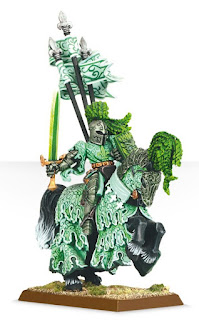
I Want to Talk About The Green Knight


I don't do this very often but this post isn't about RPGs or gaming. It's just some thoughts on fantasy fiction in general, although it does occasionally reference RPGs because that's who I am and I know my audience.

I'll warn you when I'm about to get into spoilers. First I need to set the scene.

This post is a series of short essays. First, what I love about medieval European culture. Second, what I love about Arthurian mythology. Third, what I love about Sir Gawain and the Green Knight. Lastly, I'll talk about the movie. Warning: about half the sentences in this post begin with, "I like" or "I love," but I hope I'm still able to drive at something deeper than you might expect. 

Saturday, December 26, 2020

Elves Part 1: Reconstructing a Fantasy Archetype

Picture by Yuliya Litvinova
I've now written three articles about some of the main races in my homebrew setting without ever having intentionally set out to make a series like that. One day I just wanted to compile a bunch of my weird notes on dwarves in one place and share them. Then with gnomes. Then with halflings. And even when it had occurred to me that I have a series on my hands, I still think I was never intending to write a post on elves, because...

Well, because elves don't need a lore post.

Like, gnomes and halflings both need work done if you want them to be interesting. Even sticking to the vanilla versions is still lesser than what you get with off-the-shelf elves. Dwarves have lots of lore but it's infamous for being cliché, so revisiting it and doing something fresh justifies itself. But elves? Elves get nothing but attention. They often have too much lore. Wasting more ink on them is an injustice and disservice to the other fantasy races. To other fantasy ideas. Elves are the most thoroughly fleshed-out and experimented with idea in nearly all fantasy fiction. Just look at the TV Tropes article. How the fuck do you get this much mileage out of one idea? How does D&D manage to always, inevitably have a million elven sub races in each edition even as they avoid that mistake with other races?

The thing is, we could try to have the conversation of "what is the elf, at its core?" Analyzing fantasy ideas often means reducing them to their most vital components, the thing that makes an elf an elf no matter what else you change. And when people have that conversation, they usually arrive at something like, "fancy, graceful humans with pointy ears and whatever other traits we culturally idealize (beauty, longevity, skill, knowledge, pale skin, starlight eyes, etc.)." If that doesn't do it for you, here's a way to avoid a debate: not everyone exactly agrees on what an elf is, but most people agree that David Bowie seemed to be more elf than human, which I would say is a solid rule of thumb to operate on.

But there is inevitably a conversation after that one. Because while most elves check off most items in that definition, they all have more going on. Even the original Norse elves or Tolkien's elves. So the next question is, "having now understood what elves fundamentally are, how do you expand on that to make them your own?" This is where the interesting conversations take place. Where you get cool and novel elves from.

Me? I want to have the next conversation. And I specifically want to ask, "what should we take away from Tolkien and early D&D's answers to the previous question? What did we take for granted as classic elf tropes that really do have some potency?" Hence, reconstructing the classic elf. Not exactly as it was before, but at least giving those classic tropes another look. Kiel Chenier has really creative and cool homebrew elves that are a perfect example of not the kind of thing I'm talking about today. No one would question that Warcraft's Night Elves are a fucking rad take on elves, as with the Elder Scrolls's bizarre elves and metal Dark Sun elves and so on. But none of those are classic elves, and most fantasy creators don't really consider just going with classic elves. But as long as we're trying our own hand at writing our own elves, I want to take a moment to explore this direction.

Thursday, January 23, 2020

Violence as Magic

Disclaimer: although this is an RPG blog, I might occasionally write on something off-topic. It will probably always be RPG-adjacent, though. In this case, I’m writing about a concept in fantasy storytelling of all kinds.


Semantics

Firstly, I want to get on the same page about how we use an important word: MAGIC. I think we’ve gotten into a habit of treating it as synonymous with “fantasy.” Like, “fantastic” = “magical,” e.g. something like a unicorn that we could call a “fantastic creature” could also be called a “magical creature.” This isn’t a wrong way to use the word, but it’s distinguishable from another way that I feel used to be more common. An older definition that was more limited and yet nuanced.

Fantasy is anything impossible in reality but possible through the imagination. So all magic is fantastic. BUT...

Magic itself is an activity. It’s something that people learn and do. Magic is performed. Not all fantasy is magic. A floating continent in the sky isn’t magic. Unless it’s floating because someone cast a spell to make it do that.